From a Paper Napkin to 47 Trophies: The Life and Legacy of Lionel Messi
Overcoming growth hormone deficiency in Rosario, the Argentine maestro built football's most decorated career across Barcelona, Paris, and Miami.
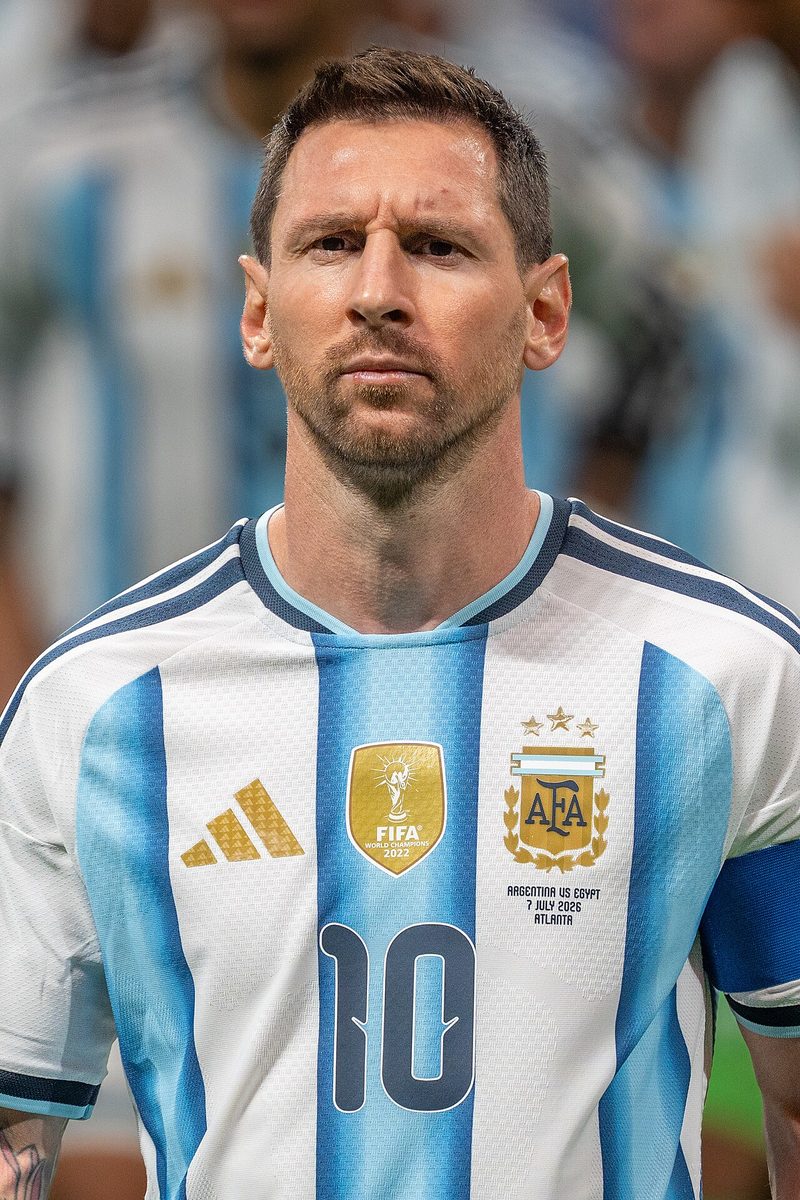
No player in the professional game has won more than Lionel Andrés Messi: 47 senior team trophies from more than 1,150 career appearances. Over a senior career spanning more than two decades, the Argentine forward has scored over 930 goals and delivered more than 420 assists for club and country, earning eight Ballons d'Or, six European Golden Shoes, and eight FIFA world player awards.
Messi was born in Rosario, in Santa Fe Province, on 24 June 1987, and grew up in the working-class Las Heras district. His father, Jorge Messi, worked as a department head at an Acindar pressed steel plant in nearby Villa Constitución, while his mother, Celia Cuccittini, had a job in a workshop that made magnets. Messi was the third of four children, alongside his older brothers Rodrigo and Matías and his younger sister María Sol. Two of his cousins in Rosario, Maximiliano and Emanuel Biancucchi, also went on to play the game professionally.
Messi started kicking a ball at the age of four with local club Abanderado Grandoli, where his father served as coach. His maternal grandmother, Celia, regularly accompanied him to pitches across the neighbourhood and pushed coaches to give the diminutive boy playing time. Her death shortly before his eleventh birthday left an indelible mark on him. Messi has marked virtually every goal of his career by pointing both index fingers toward the sky in her memory.
The Rosario Crucible and the Barcelona Napkin
At age seven, Messi joined Newell's Old Boys, the Rosario club he has supported throughout his life. Over six seasons with Newell's, he scored nearly 500 goals as a member of "The Machine of '87," a youth squad named after their birth year that dominated youth circuits across the region. During half-time breaks of Newell's senior matches, Messi regularly juggled the ball on the pitch to entertain home supporters, idolising Brazilian striker Ronaldo and River Plate playmaker Pablo Aimar.
Crisis struck when Messi was 10 years old. Doctors diagnosed him with a growth hormone deficiency, a condition requiring daily subcutaneous injections that cost at least 1,000 Argentine pesos per month. Jorge Messi's workplace health insurance covered only two years of treatment, and Newell's reneged on an agreement to fund the remainder. River Plate offered to sign him after a four-goal trial and pay for his hormone therapy, but Newell's refused to release his registration card.
Faced with mounting medical costs, the family turned to relatives in Catalonia to arrange a trial with FC Barcelona in September 2000, when Messi was 13. Barcelona first-team director Carles Rexach was captivated by his trial matches, but the board hesitated to commit money to a foreign boy so young. On 14 December 2000, an ultimatum from Messi's camp led Rexach to draft an agreement on a paper napkin, pledging Barcelona's commitment.
In February 2001, the Messi family moved into an apartment near Camp Nou. The transition proved painful. Transfer paperwork disputes with Newell's restricted Messi to friendlies and Catalan league fixtures during his first year. In the dressing room, he spoke so quietly that teammates initially wondered if he was mute. Homesickness fractured the household; his mother and siblings returned to Rosario, leaving Messi alone in Barcelona with his father.
La Masia, Trophies, and Heartbreak in Blue and White
By February 2002, the Royal Spanish Football Federation cleared Messi for full competition. At 14, he completed his growth hormone therapy and took his place in Barcelona's "Baby Dream Team" alongside Cesc Fàbregas and Gerard Piqué. During the 2002–03 campaign, he scored 36 goals in 30 games for Cadetes A. In the Copa Catalunya final against Espanyol, played a week after suffering a fractured cheekbone, he discarded a protective plastic mask after several minutes of discomfort and scored two goals inside 10 minutes to seal a 4–1 win.
Messi made his La Liga debut for Barcelona on 16 October 2004, aged 17. Over the next 17 seasons he collected 34 trophies, a club record, among them 10 league titles and four Champions League crowns. He scored 672 goals for Barcelona, establishing an all-time record for a single club. In the 2008–09 season, under Pep Guardiola, he led Barcelona to the first treble in Spanish football history. Six years later, alongside Luis Suárez and Neymar in the "MSN" frontline, he captured a historic second European treble in 2014–15.
International success arrived at a far slower pace. After capturing Olympic gold at Beijing 2008, Messi assumed the Argentina captaincy in 2011. He carried his country to three consecutive major finals—the 2014 World Cup in Brazil, the 2015 Copa América in Chile, and the 2016 Copa América Centenario in the United States—all of which ended in extra-time or penalty-shootout defeats. Devastated, Messi announced his international retirement in June 2016 before changing his mind soon afterwards.
Final Glories from Lusail to South Florida
Financial mismanagement at Barcelona brought an abrupt end to Messi's stay in Catalonia in August 2021. He joined Paris Saint-Germain as a free agent and won two Ligue 1 titles there. Concurrently, his national team fortunes reversed. Messi captained Argentina to the 2021 Copa América title at the Maracanã, their first major trophy in 28 years. At the 2022 World Cup in Qatar, Messi scored seven goals and led Argentina past France in a dramatic final at Lusail Stadium, capturing the trophy that had eluded him.
In July 2023, Messi signed with Major League Soccer club Inter Miami, transforming the sport's profile across North America. He led Miami to the 2023 Leagues Cup, the club's first trophy, and was named MLS MVP in 2024 and 2025. With Argentina he won the Copa América again in 2024.
After the 2026 World Cup, where Argentina lost the final to Spain on 19 July, Messi announced his retirement from international football on 31 August 2026, ESPN reported. He returned for one farewell match against Benin at the Monumental on 6 October 2026, scoring a penalty and setting up two goals in a 3-0 win, according to AP. He finished his Argentina career with 208 caps and 126 goals.